For now, is generative artificial intelligence over-hyped?

Gary Marcus once joked: "A few years ago, if your startup had. ai in its domain name, you could add a zero to your valuation. Now, it may be two zeros, especially when you say that you are using generative AI. "
This sentence tells the biggest doubt of the industry-at present, is generative artificial intelligence over-hyped?
In October this year, CCS Insight, a global scientific research and consulting company, released a forecast report saying that the field of generative artificial intelligence, which was hot in 2023, will be tested by reality in 2024. The specific manifestations are: the technical hype is gradually fading, the operating cost is rising, the regulatory voice is increasing, and investors are no longer as excited and optimistic as before.
Recently, in an interview with Handelsblatt, Bill Gates also said: "Many people inside OpenAI, including Atlman, believe that GPT-5 will be significantly better than GPT-4. But I have many reasons to believe that the current generative artificial intelligence has reached its limit. "
People tend to overestimate the effect of a technology in the short term and underestimate its effect in the long term. Now everyone knows that generative AI is still in "awkward adolescence", but it is not very clear how long this adolescence will last and when it will change.
For early investors, it is very important to be able to accurately judge the turnaround.
A few days ago, Coatue, the "King of Wall Street TMT" American hedge fund, released a 115-page report (The AI Revolution), which made a 360-degree analysis of the current stage of AI, whether AI can cross the hype cycle, open source and closed source, and the AI-centered ecosystem.
Among them, Coatue clearly pointed out that AI is not hype, and the golden age of AI has not yet arrived.
Coatue has always had high hopes for AI. In the Investor Deck released in June this year, Coatue further pointed out that the recession era has come, but at the same time pointed out the "breakthrough" moment of the next technological supercycle: AI may become the new lifeline of the economy.
Over the years, this head fund has surpassed most of its peers in its practical strategies and macro understanding in dealing with different cycles, and firmly controlled the context of the technology industry.
For example, in 2020, when the global epidemic was the worst, Philippe Laffont, the founder of Coatue Management, became the seventh among the top ten hedge fund managers in the world with his precise investment vision.
In 2022, when the United States experienced great inflation and unprofitable technology stocks fell sharply, Coatue planned to withdraw in advance, freeing up nearly 80% of the cash.
This 115-page report is full of information, and the appropriate way will integrate the key information intercepted from it.
Will AI hype end in 2024?
First of all, Coatue gives a clear positioning of the development status of AI.
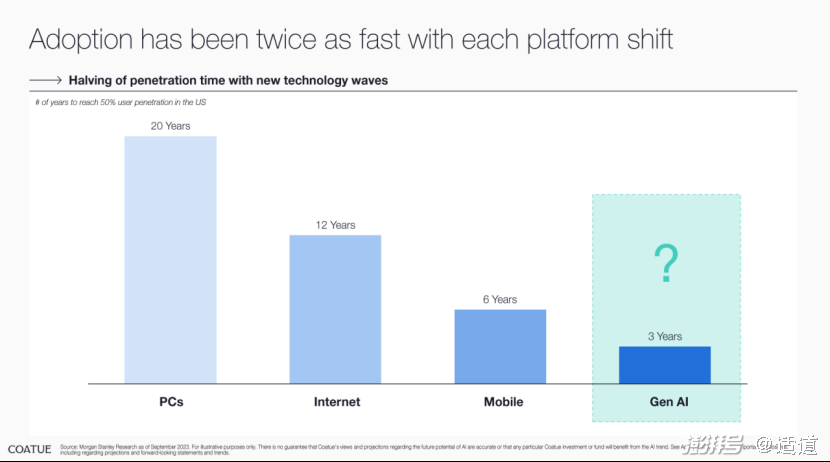
Compared with the time when the new technology reached 50% user penetration rate in the United States, it took 20 years for PC, 12 years for Internet, 6 years for smartphone, and 3 years for generative AI.
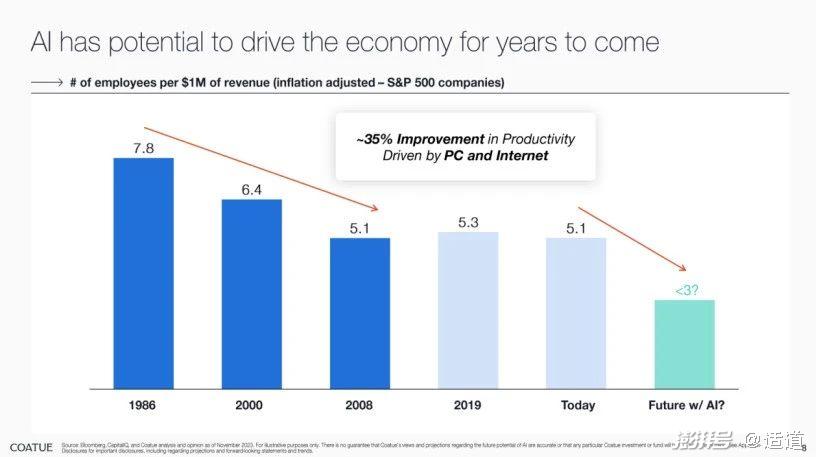
Another comparison: In 1986, S&P 500 Company employed about 7.8 people to generate $1m revenue, now it is 5.1 people, and in the future, in the AI era, this number will be less than 3 people.
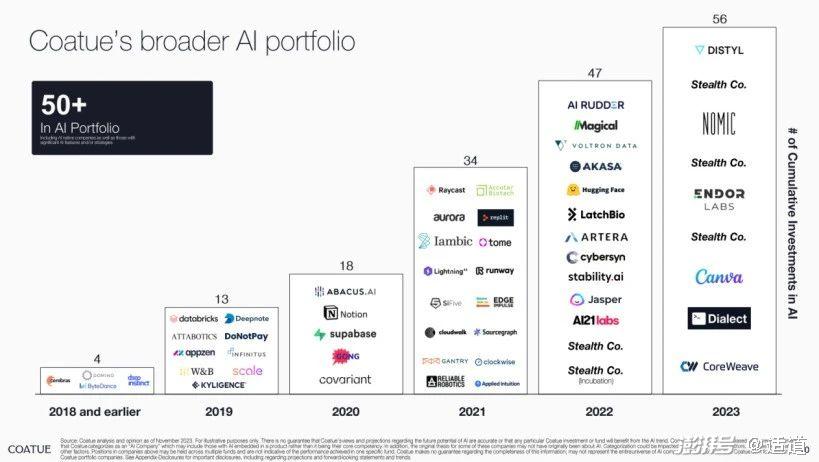
In this context, Coatue rapidly expanded its AI portfolio in 22/23. Among them is Stability AI, which has recently fallen into turmoil. It is reported that Coatue Management wrote to ask its founder, Mostaque, to step down, and asked the company to provide details of Mostaque and other executives’ salaries.
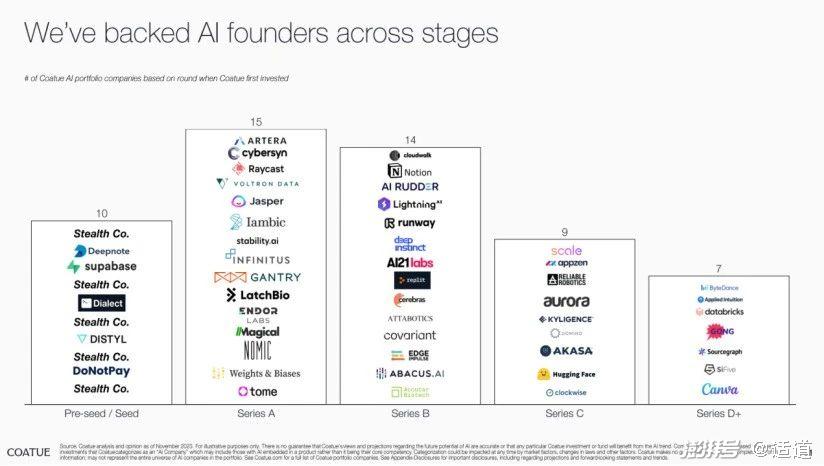
Then, the report entered the first topic: Is AI hype?
There are three characteristics of hype: 1. The recorded value does not match the investment, and the optical fiber in the 1990s; 2. Overestimate the time and ability of technological development and drive automatically; 3. The immature technology leads to the lack of universal practicability, quantum computing.
Coatue responded to the above three points respectively, clearly pointing out that AI is not hype.
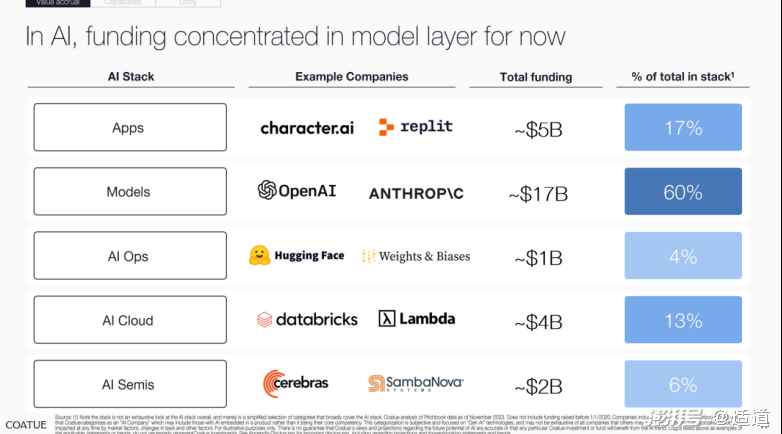
First, most AI investments are focused on the model level (accounting for 60%), and the recorded value has already appeared;
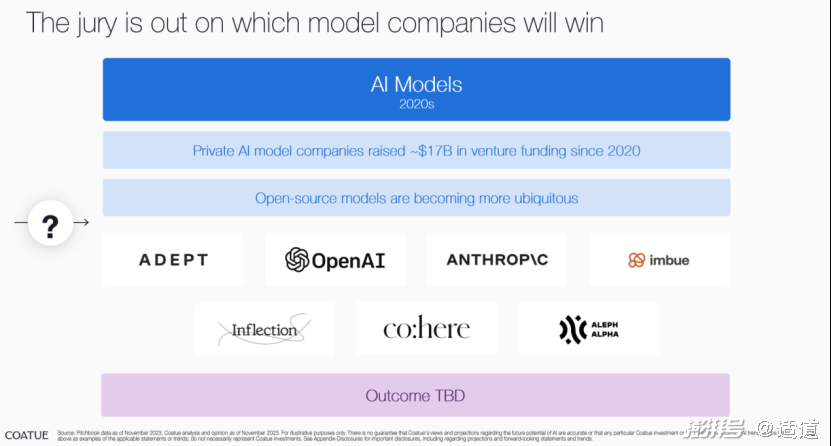
However, for who is the winner of the big model, Coatue deliberately used a page of ppt in the report: I don’t know. . .
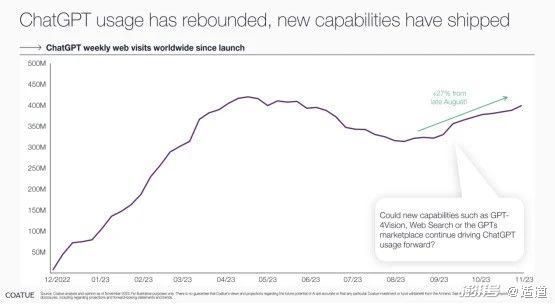
Although the number of visits to ChatGPT decreased in the middle of this year, its usage increased by 27% compared with that in August after the introduction of new features. As for the future situation, we will wait and see.
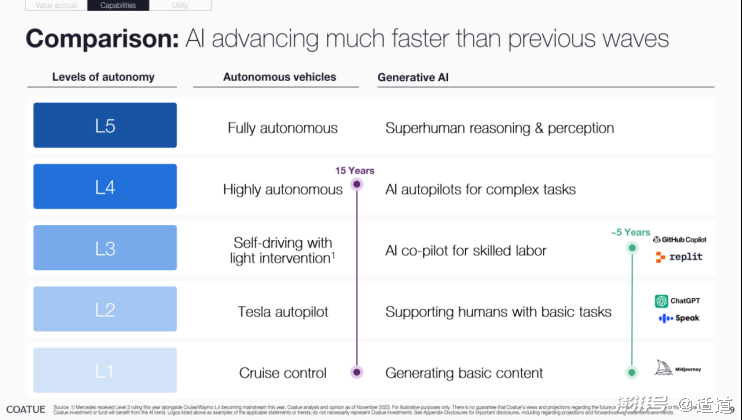
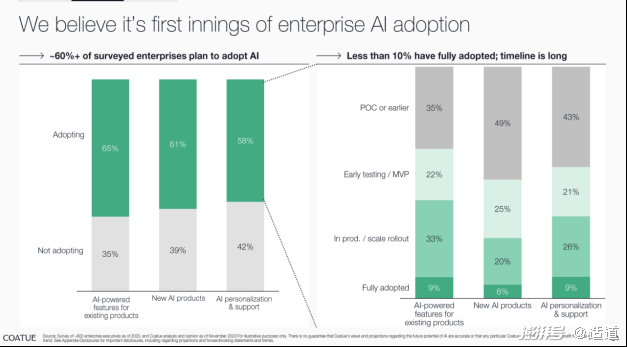
Second, compared with the "money-burning black hole" autopilot that took 15 years from "L1-L4", AI has shown its effectiveness in the past five years. For example, AI autopilots have been able to complete complex tasks on their own, which has probably reached the level of autopilot L3. Even in the early stage, 60% of enterprises plan to adopt AI.
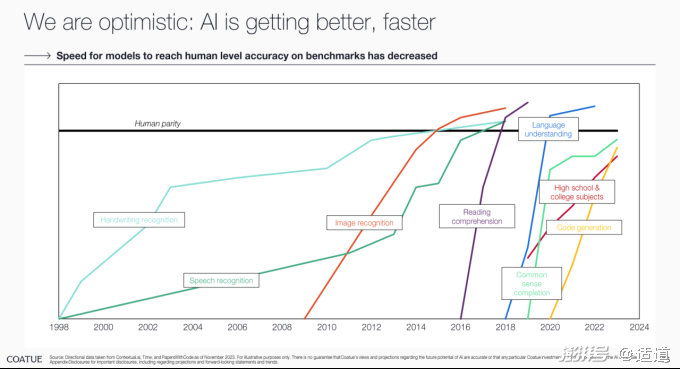
Moreover, in the benchmark test, the time for the future model to reach the human level is shortening. This can be found from the huge differences between ChatGPT3.5 "primary school students" and 4.0 "doctoral students".
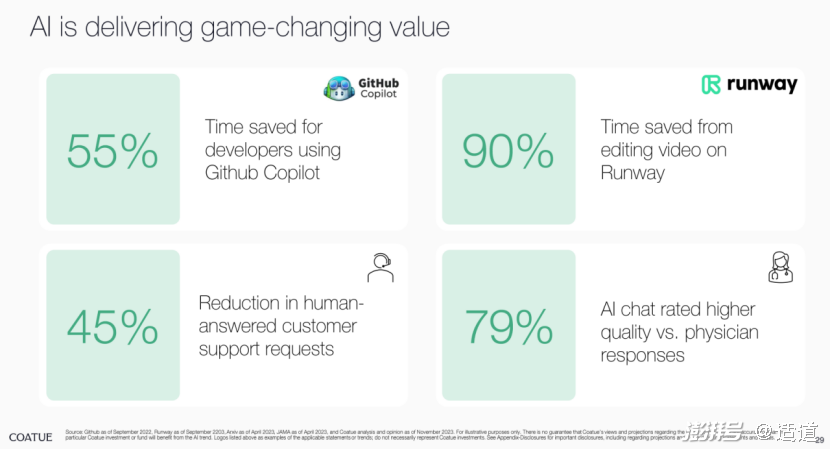
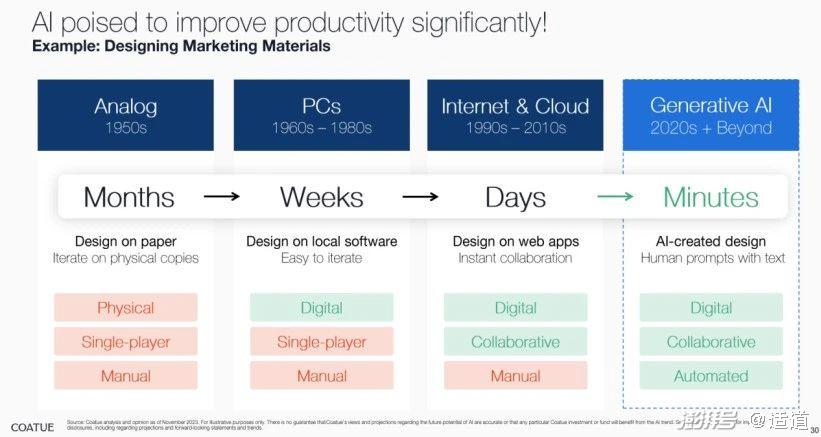
Third, at present, quantum computing has no theory, and it has not even been confirmed, but AI has proved its practicability in various fields. For example, developers use CopilotGithub to save 55% time; Editing videos on Runway saves 90% time and so on.
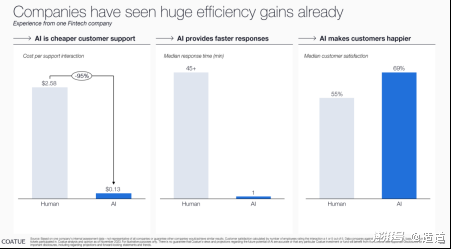
A Finicch company, using AI’s customer service, saved 95% of labor costs; Reduce the response time from 45 minutes to 1 minute; Customer satisfaction increased from 55% to 69%.
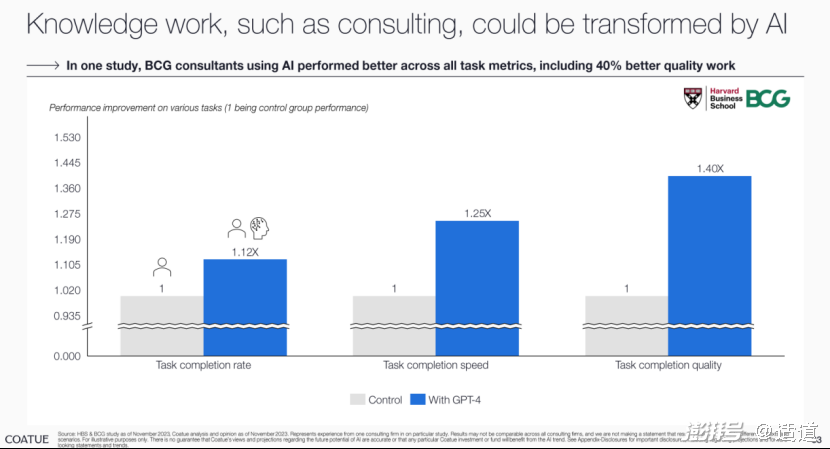
In addition, knowledge-based jobs such as consulting will also be changed by AI. Research shows that BCG consultants perform better in all tasks after using AI, and the quality of work has improved by 40%.
Overall, Coatue believes that AI technology is evolving with each passing day, enterprises and people are willing to adopt it actively, and AI has actually improved productivity in some areas. Therefore, AI is not a hype.
Generally speaking, there are three main voices supporting the "AI hype theory": 1. The degree of intelligence is not enough, so that the momentum in 2023 is too strong, and it is necessary to take a "cold bath"; 2. Investors don’t want to spend money, and the operating cost is too high. After all, even Microsoft’s GitHub Copilot is losing money; 3. Regulatory issues-"Sword of Damocles" hanging over AI.
Shi Dao thinks: First of all, it is not so much that AI will be cold in 2024 as the hot money ebbs, some products can’t match the market expectations, and AI enterprises without technical moat will be cold, which is only a "hype" at the company level at most (repeatedly "whipping the corpse" Jasper here), which is not the hype of the whole industry at all.
Secondly, the high cost of computing power is actually a short-term problem. After all, the cost of anything new will be high, including the Internet. At present, the cost can be reduced by optimizing the bottom of the algorithm. Now there are many large open source models, and new optimization methods have been released. Everyone is trying to minimize the cost of training fine-tuning models through various methods.
For the hardware that is not so easy to "reduce costs" at present. To borrow a sentence from Musk: "NVIDIA will not always occupy a monopoly position in the large-scale training and reasoning chip market."
Today, six sects are besieging the Guangming Top in NVIDIA. Before, semiconductor giants such as Intel and AMD announced a new round of AI chip research and development plans. Later, downstream customers such as OpenAI and Microsoft promoted self-developed chips and made their own shovels. From the domestic point of view, there are also 4-5 companies involved in the chip track. Some insiders even optimistically estimate: "The AI chip track will break out again at the end of the year, and the chip crisis will be solved as soon as next year."
In the long run, according to Wright’s law, the production cost and software cost of AI-related computing unit (RCU) will decrease by 57% and 47% annually, respectively. By 2030, the integration of hardware and software can reduce the training cost of AI by 70% every year, and the production AI will create hundreds of trillions of dollars in economic value.
Reduce costs while increasing efficiency. According to ARK’s research, generative AI will increase the productivity of knowledge workers by more than four times in 2030. In the case of 100% adoption of AI, global labor productivity will increase by about 200 trillion US dollars. AI coding assistants such as Copilot can increase the output of software engineers by about 10 times in 2030.
No matter now or in the future, AI is not a product of "hype" at all.
So now only the regulatory issues remain.
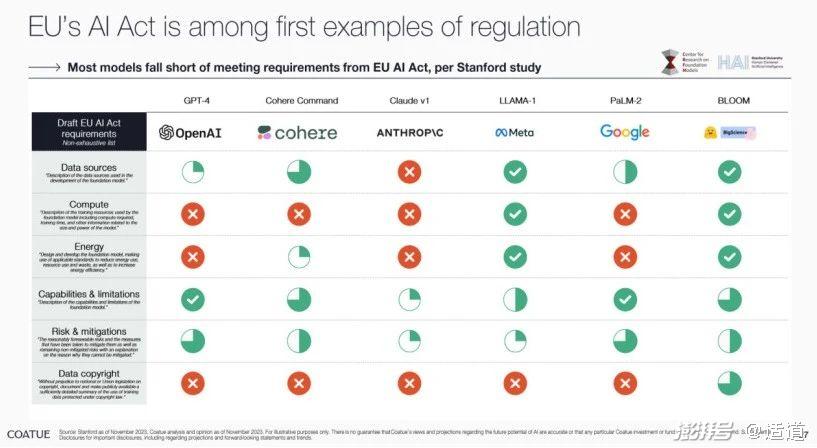
In this regard, Coatue clearly expressed concern in the report. In the survey, 83% of the respondents did not trust AI security, and even 57% of the respondents supported the previous initiative of "suspending AI development for 6 months". However, according to Stanford’s research, most of the current AI models do not meet the requirements of EU AI Act.

At the beginning of November this year, the first global artificial intelligence (AI) security summit was held in the UK. Representatives from more than 25 countries, including China, the United States, the United Kingdom and the European Union, as well as technology giants such as Musk and Sam Altman, attended the summit. Finally, all the participating member countries signed the Bletchley Declaration and agreed to establish an AI supervision method through international cooperation.
Is it better to open the source or close the source?
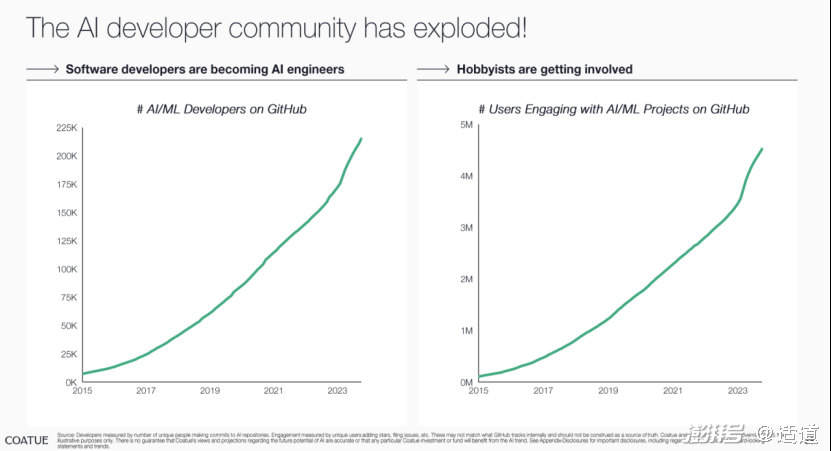
In this regard, Coatue believes that open source is the heart of AI, and open community ecology is crucial to the next development of AI-"AI is built in the open". At the same time, the developers in the AI community are growing rapidly, software developers are becoming AI engineers, and amateurs are also involved.
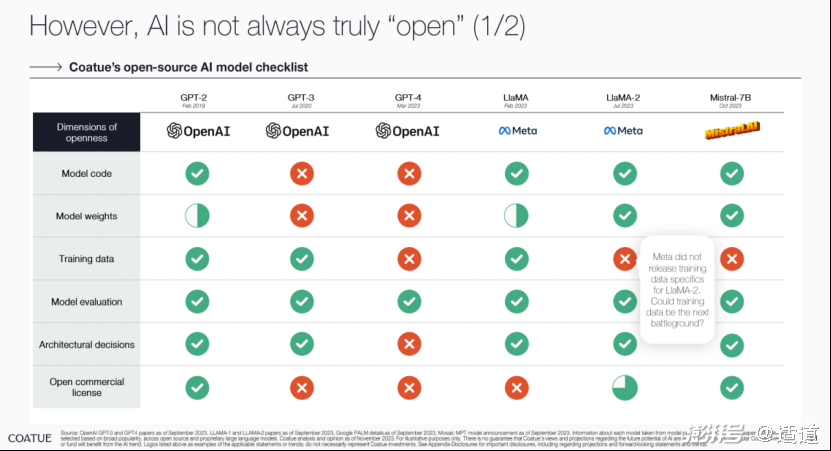
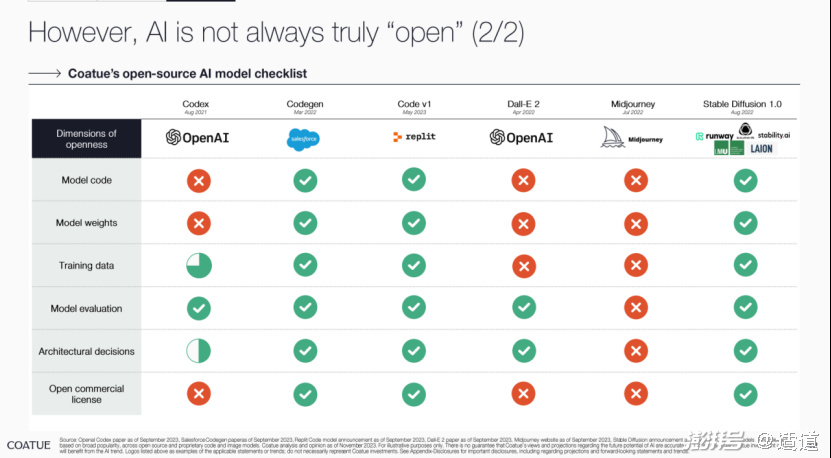
However, at present, different AI models are different in openness.
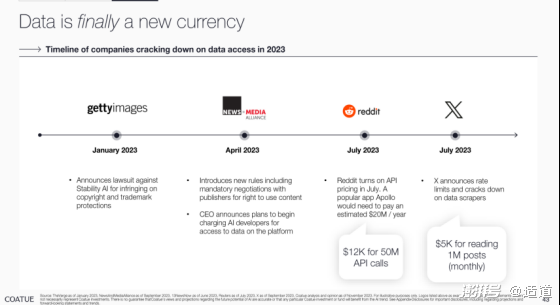
Coatue believes that in this context, data has become a currency, and both Reddit and X have already charged for reading training data. Reddit charges $12,000 for 50 million API calls; X is $5,000 a month, and you can brush 1 million posts.
Nevertheless, Coatue found that the level of open source model is rapidly catching up with that of closed source model, with blue being open source and green being closed source.
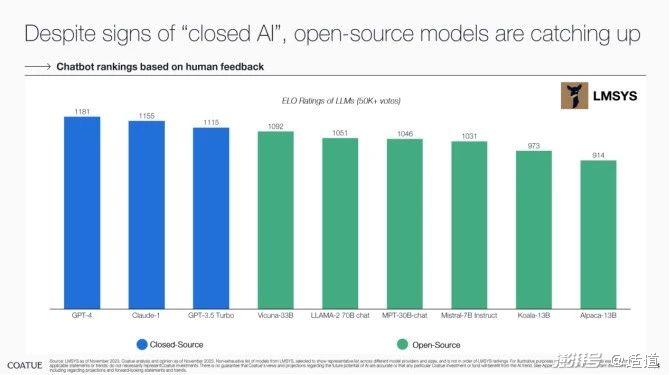
In fact, regarding the dispute between open source and closed source, Shi Dao quotes a passage from Professor Wang Huaimin, an academician of Chinese Academy of Sciences and director of CCF Open Source Development Committee: In a certain era, such as the certain PC era, Microsoft promotes the development of a product in a closed way with its enterprise organization model, which is called parthenogenesis, and every new product is defined by Microsoft. This model is competitive when dealing with the certain development trend, and the development of personal computers is Microsoft’s success.
However, when the Internet era comes, in an uncertain Internet era, to adapt to the possibility, the open source competitiveness will be strong. The open source Linux community has released a core version, and more people have constantly revised this core version according to their understanding of needs and fields, forming a bisexual reproduction, which can produce or produce more new versions that adapt to future development at low cost, that is, there is a seed copy that everyone can copy. According to my own understanding of future changes, I will produce a new version, open source it to adapt to an environment, evaluate it by the environment, and then iterate back and develop it continuously. This new version is not completed by one enterprise, but by all social participants, including some new innovative enterprises. Therefore, the number of participants and the cost for participants in the new version that adapts to the uncertainty in the future have become a model compared with the organizational model of a large Microsoft company in the past. Open source is more competitive in uncertain times. "
Now we are standing in an uncertain era of artificial intelligence, and open source is more of an innovative direction. The competition between open source and closed source is not in a certain field, but each of them has stepped out of a differentiated road and ushered in its own world.
But from the perspective of start-ups, the closed-source big model is obviously more commercially valuable. Some people think that the end of the commercialization of the model is the industry, and the big model will go to the industry and land on the closed source.
However, if there is already a powerful open source model such as Llama 2, is anyone willing to use closed source?
Yes, but what everyone wants to use must be "the king of the king".
ChatGPT, for example, has been released in the context of Llama 2 (similar to ChatGPT 3.5). As mentioned above, even though the number of visitors decreased in the middle of this year, its usage increased by 27% compared with that in August after the launch of new functions.
In other words, some enterprises that already have advantages can become "kings of closed sources", and they also have advantages in realizing the full commercialization and industrialization of large-scale models.
In this regard, other companies still don’t have to "die" the closed-source big model. After all, the data has become currency, and it is necessary to add money to Musk by brushing more posts.
03 AI-centered ecosystem
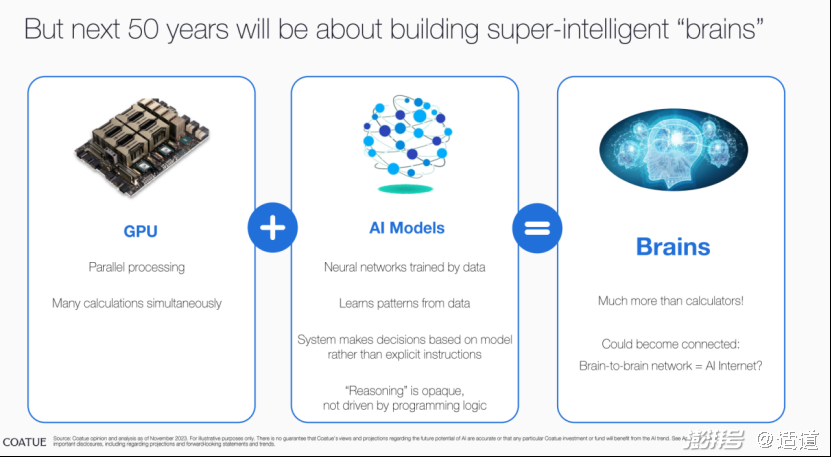
In this part, Coatue puts forward a new paradigm: CPU+Software= computer-GPU+AI = human brain.
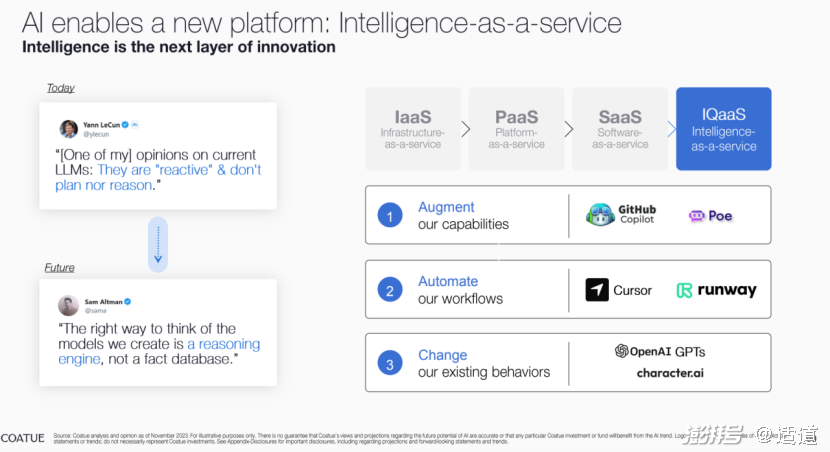
Coatue believes that AI will usher in the era of "intelligence as a service IQaas".
In improving the performance of the model, Coatue emphasized the importance of data, including data quality, data quantity, data scarcity and optimization of fine-tuning methods.
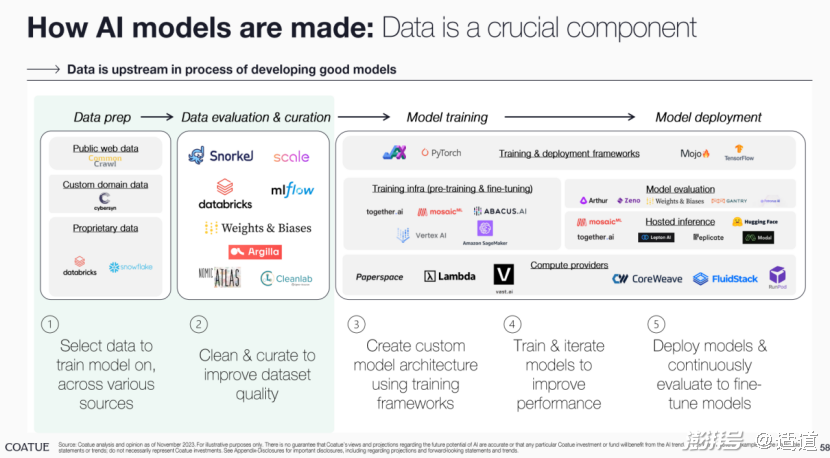
Specifically:
1. The number of token in the training data set is on the rise, and the premise of the training model is to increase the data set;
2. By 2026, high-quality text data may soon be exhausted, while image and video data can be maintained until 2024, and data scarcity may become a potential obstacle in training models;
3. Data quality and quantity are equally important. There is evidence that training on simplified data sets will achieve similar or even better results than training on complete data sets;
4. The synthesized data is helpful to clean and refine the data set for fine-tuning, although it is still not comparable to the real data.
In addition, it is also an effective way to improve the model through user feedback data, taking Midjourney as an example.
In the latter part, Coatue thinks that the demand for GPU has just begun.
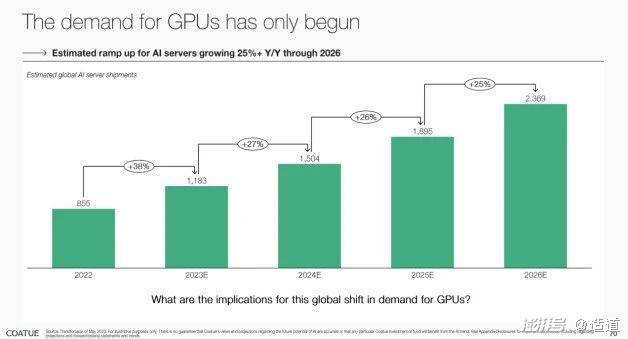
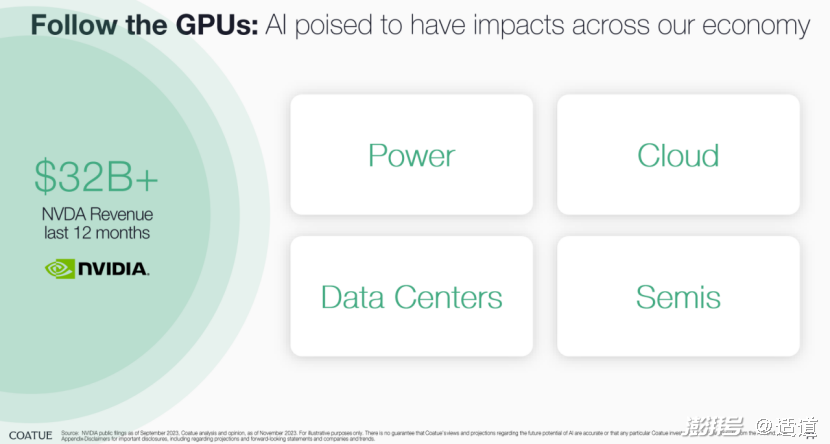
At the same time, Coatue predicts that it will bring more than 50% new energy demand by 2026, and will bring a lot of opportunities to the growth of the cloud market and the semiconductor industry.
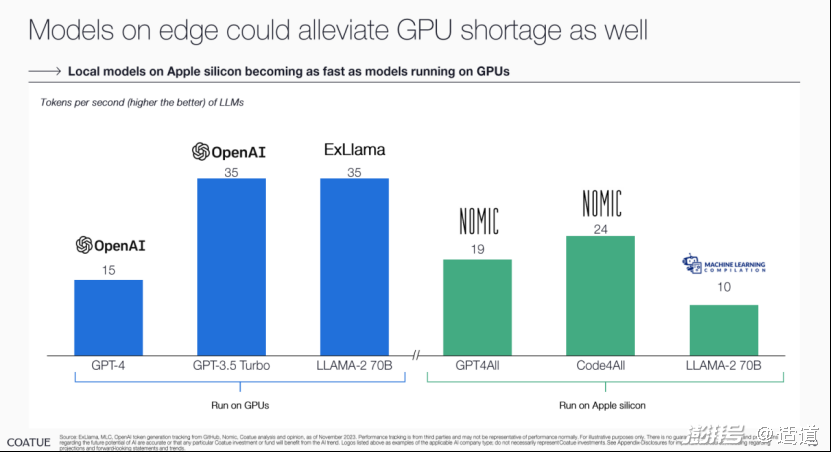
However, running the AI model on edge devices may help alleviate the shortage of GPU. For example, the local model of Apple chip runs as fast as the GPU.
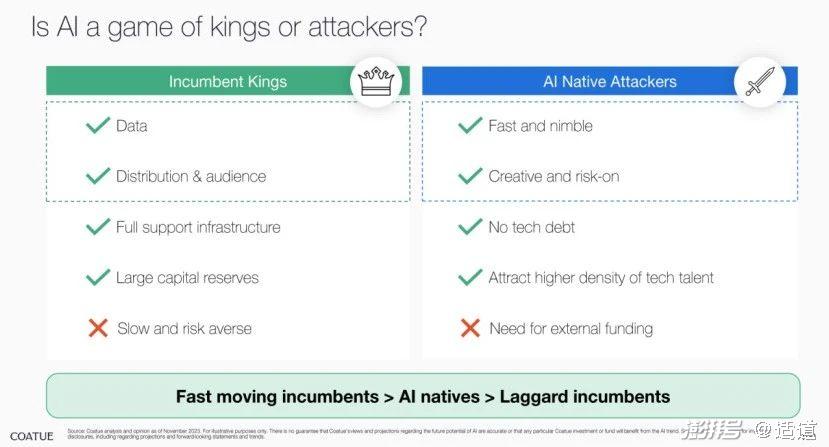
Finally, Coatue raised a question: Is AI the game of the existing giants or the game of the original challenger of AI? And draw a conclusion: pre-emptive existing enterprises > AI original enterprises > backward existing enterprises.
At the same time, Coatue used Character AI as an example to point out the breakthrough road of AI start-ups: to create a new model like Internet predecessors. With unresolved problems in various fields, AI is expected to unlock more killer applications in the future.
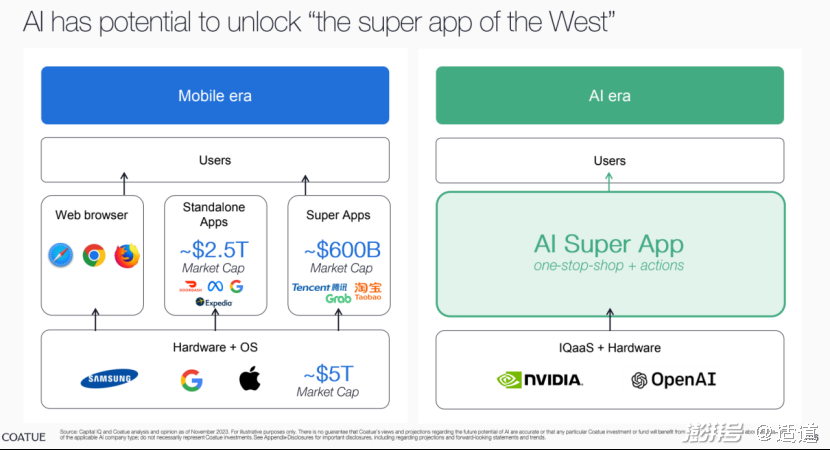
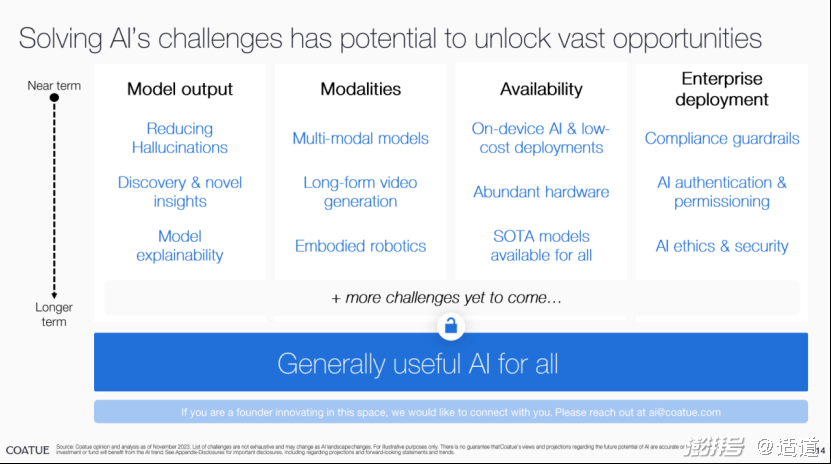
04 Coatue’s point of view: The best AI hasn’t arrived yet.
In the closing part, Coatue made some summaries:
1. English will become the future programming language.
2. Edge AI devices will be widely used, and the pocket model is just around the corner.
3. Expanding the AI model will be an engineering challenge. Since the release of GPT-3, the number of engineers in OpenAI has more than tripled.
4. Private data will unlock more usage scenarios. Personalized medical treatment appears in the field of biotechnology; NETFLIX will customize the program on demand; E-commerce platform becomes AI shopping housekeeper; Everyone can become an engineer and so on.
5. Multi-modal big model is the frontier innovation direction, and the infrastructure will have new development. For example, in October this year, Stanford University proposed a new architecture: Monarch Mixer, which needs no Attention and is expected to be a substitute for Transformer. If it is realized, as Coatue put forward in the first part: Will Open AI still be the ultimate winner of the big model?