Thousand-year domestication history of seeds
Plant a millet in spring;
Thousand-year domestication history of seeds
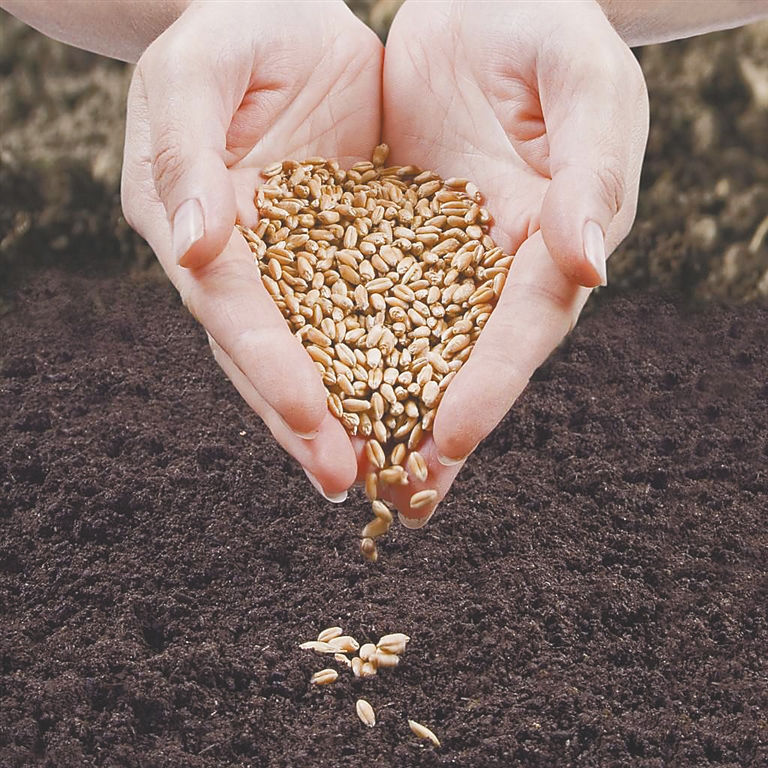
Seeds sow hope.
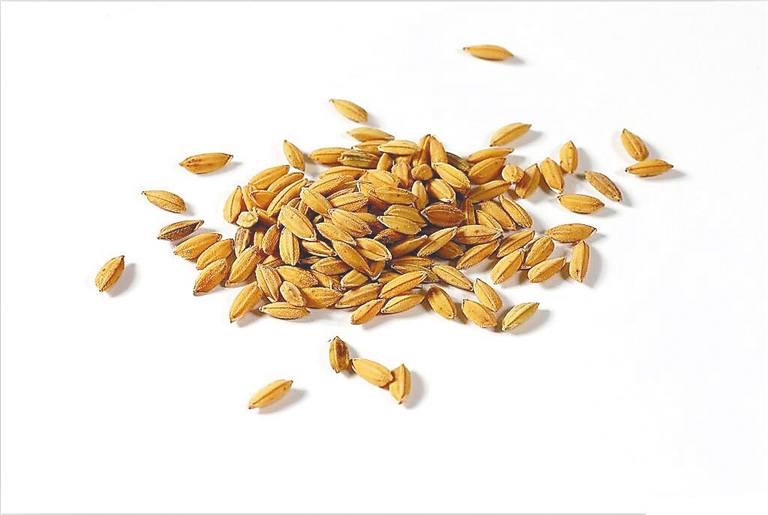
Rice seeds.
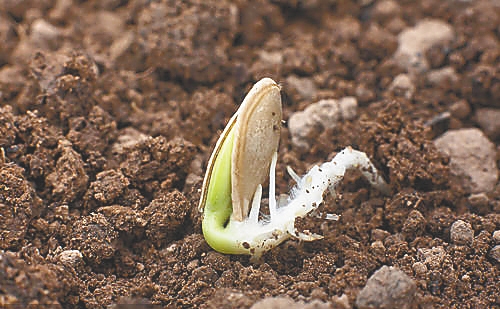
Seeds breed new life.
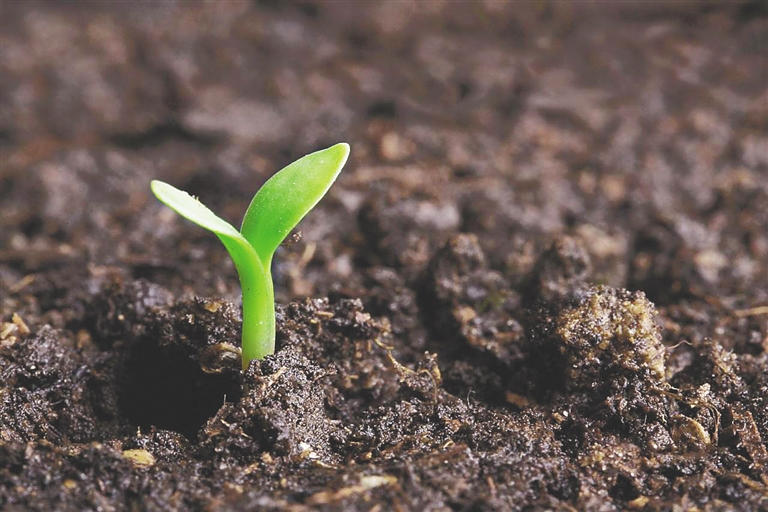

Jin Manlou, a special contributor to this magazine.
In the long history of human development, hunting and gathering fruits was once the main way of human existence. It was not until about 10 thousand years ago that humans domesticated animals and plants, which made agricultural civilization rise. In the following thousands of years, the grain output increased continuously, and human beings took root and sprouted all over the world like seeds, eventually forming various nationalities.
A
The origin of seeds
There are about 300,000 kinds of plants in nature, of which more than 2,500 are edible and more than 250 are domesticated and planted. Crops such as rice, wheat, corn and so on, which are common at present, are all domesticated from seeds by human beings without exception.
Ten thousand years ago, primitive agriculture developed from collection and was closely related to seeds. At first, people found that plant seeds can take root, germinate, blossom and bear fruit under suitable temperature and water conditions, and then produce more fruits and seeds. As a result, human beings deliberately pick out those edible plant seeds that can bear bigger and more fruits and plant them in the right season. Under the careful cultivation of people, plants grow stronger and stronger, and produce more and more fruits and seeds. In this way, after generations of planting and screening, human beings have learned to farm, and agricultural civilization has gradually matured.
Judging from the crops domesticated by early humans, no matter millet, rice, wheat or other food crops, there is a common law that most of them belong to Gramineae. Gramineae contains a lot of weeds, and human food crops are actually domesticated from weeds.
Take the common "millet" in Shang and Zhou Dynasties as an example, which was domesticated from Setaria viridis. Setaria viridis is widely distributed in Asia, and it is also common in the Yellow River Basin of China. At the beginning, the ancient ancestors only planted wild green bristlegrass as feed, and then gradually domesticated it as a food crop. As the "head of the five grains", millet was repeatedly mentioned in China ancient books such as The Book of Songs, and Xia and Shang Dynasties were also called "millet culture" dynasties, which shows the importance of millet at that time.
At that time, the ancient ancestors of China relied on the natural variation of Setaria viridis, and then adopted systematic breeding methods to completely separate it from the wild population, thus becoming a food variety that people were willing to plant and eat. It is estimated that this process may have gone through one or two thousand years. After being domesticated, millet is very suitable for planting in dry land in northern China because of its advantages of drought tolerance, barren tolerance and short growth period, which has also made great contributions to the increase of population in the Central Plains. Until the Qin dynasty, millet was still the staple food of ancestors in the Yellow River basin.
Judging from the domestication history of seeds, the history of common crops at present is not long. Among them, single wheat was the earliest domesticated wild grain, and the domestication time was about 9000 BC. The wheat planted now is a cultivated species formed by crossing Aegilops tauschii and Triticum cone more than 8000 years ago. After wheat, humans domesticated crops such as rice, corn, potato, millet and barley.
B
Crop transformation
In ancient times, the crops in China generally showed the pattern of "millet in the south and millet in the north". The "millet" here is also called yellow rice, and the "millet" is now millet, and they can still be seen on the breakfast table now. Around the Han Dynasty, with the emergence of grinding and fermentation technology, wheat planting quickly replaced millet, which gradually changed into a new pattern of "northern wheat and southern rice".
It is generally believed that wheat originated in West Asia and was introduced to China about 4,000 years ago. Judging from the carbonized wheat remains in Longshan period, the earliest wheat remains in China can be traced back to 4000 -4500 years ago. From the path, wheat should be introduced from the west to the east through human migration, trade and exchange activities. It first entered the western region and then spread to the eastern region. In this process, wheat has also been domesticated into various sub-varieties. With the continuous improvement of yield and performance, wheat ranks among the top three food crops in the world, and its yield is second only to corn and equal to that of rice. At present, wheat is the main food in more than 40 countries and nearly 40% of the population in the world.
As the main food crop in southern China, rice was domesticated in China at the earliest. According to academic research, rice originated from wild rice, which is widely distributed in various regions of Asia and China. The remains of ancient rice in China have been found in Xianrendong site in Jiangxi, Diaotonghuan site and Shangshan site in Zhejiang. According to the size and morphological characteristics of these rice grains, archaeologists believe that these are all in the early stage of rice domestication. Today, rice is planted on all continents except Antarctica, providing the main food for more than one third of the world’s population.
Apart from wheat and rice, corn from America is a late-growing food variety. About this matter, we have to start from Columbus discovery of america in 1492. At that time, after Columbus came to America, he was immediately attracted by a tall new plant in the field. He wrote to tell a friend: "I found a strange kind of grain, and its name is’ Mahiz’." After that, corn spread from America to Spain, Portugal and then all over Europe. Around the 16th century, corn was introduced to China from the sea through the Nanyang Islands.
In addition to corn, American crops introduced to China in Ming and Qing Dynasties included sweet potatoes, potatoes, peanuts, pumpkins, peppers, tomatoes and sunflowers. Most of these crops were introduced into China from Nanyang, and played a certain role in the population growth in Ming and Qing Dynasties.
C
The crisis of seeds
Although the process of human domestication of seeds is relatively smooth, it is not a smooth road. In fact, food crisis and security have always been a big problem that puzzles the whole world. In the long history of mankind, food shortage caused by various reasons has repeatedly threatened human survival. Today, this problem still exists.
Take the Irish potato crisis in the mid-19th century as an example. After the 16th century, potatoes were introduced into Europe from America, which greatly promoted the growth of European population. However, in the 1960s, potato blight broke out suddenly in Ireland, which indirectly killed more than one million people and forced millions of people to leave their hometown and flee to the United States and other countries. The root of this catastrophe is that the varieties of potatoes planted by Irish people at that time were too single and very fragile in the face of epidemic diseases.
A few years ago, the exposure of Hunan’s "Golden Corn Case" also made China pay attention to the problem of seed crisis. According to the survey, at present, rice and wheat are the two most basic food crops in China, which are completely self-bred. However, due to the low yield level of corn, soybean and potato in China, more seeds are imported from abroad. In particular, some high-end varieties of vegetable seeds are mainly imported.
In the process of introducing foreign varieties, many local seed varieties gradually disappear, which is a great pity and should be vigilant. In this sense, the state needs to attach great importance to the development of local seed industry, not only to speed up the cultivation of varieties with independent property rights, but also to strengthen variety protection.
The problem of seed crisis is not limited to domestic, but also a global problem. Due to human greed and ignorance, the ecology of many areas has been destroyed and the vegetation area has shrunk dramatically. The loss of plant habitat makes plants lose their homes for survival, and after the plant diversity is weakened, the "seeds" of seed crisis are also planted.
There is no denying that the earth is rich in plant resources, among which many species with potential economic value have not been domesticated by human beings. On the other hand, when a plant disappears from the earth, it is not only the plant itself that human beings lose. Because of the extinction of a plant, a series of chain reactions triggered by it often lead to the survival crisis of some related organisms. In this sense, the seed crisis is a crisis of all mankind, and it is also a crisis of the entire earth ecosystem.
The pictures in this edition are all data maps.